Maintaining a Grand Dame

Maintaining a Grand Dame

Holtz team paints, restores Belle Grove Plantation in King George County

Michelle Darnell’s goal was always to have a home with a history. In 2013, she and her husband, Brett, found just the place: Belle Grove Plantation, the birthplace of President James Madison. 

“My grand Southern grandmother taught me three things: entertaining, cooking, and history,” Michelle says. “We knew we wanted history; we just didn’t know we’d get this much history.”

The home, built in 1791, has been fully restored and is filled with period antiques. The Darnells operate a bed and breakfast featuring guest rooms named for former residents. Visitors also come for tours focusing on the property’s history, monthly afternoon teas, and special events.

Belle Grove Plantation in King George County

Painting refresh

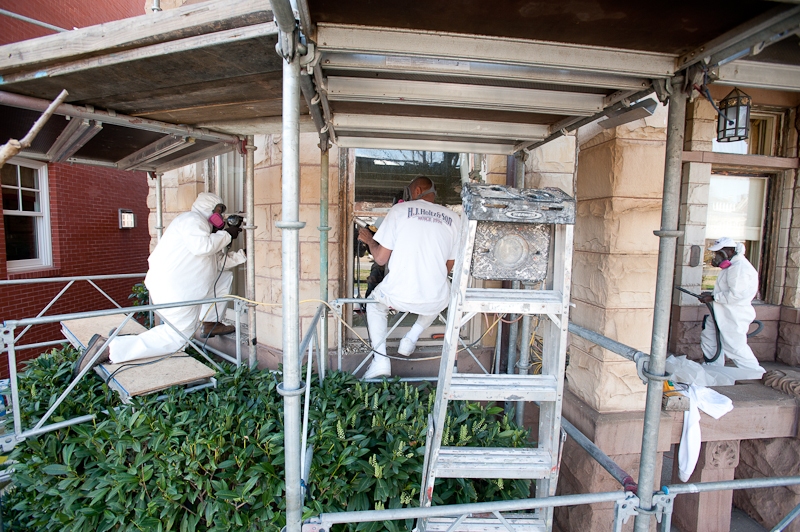
The Darnells undertook a renovation in order to maintain and preserve the mansion, which is on the National Register of Historic Places and the Virginia Landmarks Register. The H.J. Holtz & Son team assisted by refreshing interior walls with touch-up painting, which in places involved addressing water damage and mold. The team also removed the house’s shutters for off-site repair and painting. Finally, the Holtz team repaired exterior wood and then painted the full exterior

“The project seems to have gone very well,” Michelle says. “The fresh paint and exterior repairs have truly revitalized the appearance of the house, making it look brand new. We are eagerly anticipating the return of our beautifully restored shutters to complete the transformation.”

Belle Grove Plantation in King George County

Living with the past

An unexpected highlight of the project was one Holtz team member’s interaction with one of Belle Grove’s resident ghosts. 

“We are known to be very haunted,” Michelle says. “I love all my ghosts.”

The spirit of Nathaniel, an enslaved person, resides in Belle Grove’s basement. The Holtz team member took a photo of a basement window, to record its initial condition, and upon closer inspection saw a shadowy image of a head behind the glass. 

“He was excited,” Michelle says. 

The Darnells aim to include a full presentation of the plantation in their tours and don’t shy away from discussing the enslaved persons who lived and worked there. Michelle has found five years of death records pertaining to enslaved persons, which often include the individuals’ medical and family details. 

“We want to illuminate all history,” she says. 

 restores Belle Grove Plantation in King George County

Looking ahead

Michelle and Brett Darnell were introduced to H.J. Holtz & Son by their property manager, Jan Kovar. Michelle says they have been happy with the company’s work. “I would certainly consider using the Holtz team for future projects,” Michelle says. “They’ve been very nice.”

For more information about Belle Grove Plantation Bed & Breakfast, visit BelleGrovePlantation.com.

Exterior Painting in Richmond, VA: When to Plan Your Home’s Next Project

Exterior Painting in Richmond, VA: When to Plan Your Home’s Next Project

The question isn’t whether your Richmond home’s exterior will need paint. It’s when. Virginia’s climate, with its humidity swings and temperature fluctuations, is particularly demanding on exterior finishes.

Getting the timing right for exterior painting Richmond VA matters as much as the quality of the work itself. Paint applied in the wrong conditions won’t adhere properly, won’t cure correctly, and won’t protect your home as it should. This guide walks you through seasonal considerations, warning signs, and preparation standards that determine whether your exterior painting project will enhance and protect your home for years to come.

When Should You Paint the Exterior of Your House in Richmond, VA?

Richmond offers a long productive season for exterior painting Richmond VA. Here’s how each part of the year affects the work:

Spring (April through May) offers moderate temperatures, lower humidity, and the benefit of having the entire warm season ahead for paint to cure fully. Temperatures between 50°F and 85°F are ideal for most exterior coatings. Morning dew is typically gone by mid-morning, allowing our craftspeople to start early.

Fall (September through October) provides similar conditions with slightly more predictable humidity levels. Cooler nights allow paint to cure evenly without the rapid temperature swings of late spring.

Summer (June through August) is one of the busiest seasons for exterior painting Richmond VA. Longer daylight hours mean more productive workdays, and consistent warmth promotes proper paint curing. Richmond’s summer humidity does require attention. Experienced craftspeople schedule around morning dew and afternoon thunderstorms and select coatings formulated for humid conditions. With proper planning and technique, summer is an excellent window for exterior projects.

Late fall and winter (November through March). Once temperatures regularly drop below 50°F, exterior painting becomes difficult. Paint doesn’t cure properly in cold conditions, and freeze-thaw cycles can compromise the finish before it’s fully set. Shorter daylight hours further limit productive work time. This is the season when most Richmond exterior painting contractors pause outdoor work or shift focus to interior projects.

The key is planning ahead. Spring, summer, and early fall are all productive seasons for exterior painting Richmond VA. Contact your contractor early to secure your preferred window.

Signs Your Exterior Paint Is Overdue for Replacement

Knowing when your home needs exterior painting Richmond VA helps you avoid premature work and costly deferred maintenance.

Visible chalking or powdery residue on your fingertip after rubbing the paint means the coating is breaking down. This signals diminishing protection.

Peeling or flaking paint indicates adhesion failure from water penetration. Repairs will require removing all compromised paint.

Fading, color change, or uneven appearance suggests UV damage and weathering, signaling that the protective layer is thinning.

Cracks or alligatoring (web-like patterns of small cracks) mean the paint has reached its useful life. This typically appears after 7 to 10 years in Virginia’s climate, though better preparation and higher-quality paint can extend durability.

Mildew or mold growth on exterior surfaces, especially on north-facing or shaded areas, means the coating is no longer shedding water effectively.

Water damage, rot, or soft spots on wood suggest paint barrier failure. This requires repair of the underlying damage first, not just repainting. A reputable exterior painting Richmond VA contractor will address structural damage before applying new coatings.

Most exterior paint in Virginia’s climate lasts 7 to 10 years. South-facing walls may need repainting in 5 to 7 years. North-facing areas may last closer to 10 years. High-quality paint, meticulous preparation, and proper application all extend durability.

If you notice any combination of these signs, scheduling exterior painting Richmond VA before the damage advances will protect your home and keep the project scope manageable.

Why Surface Prep Determines How Long the Paint Lasts

Here’s a truth that separates experienced exterior painting Richmond VA contractors from the rest: the paint is only as good as what’s beneath it. Many DIY painters and some less experienced contractors underestimate the importance of surface preparation. This is a critical mistake.

Proper prep involves several steps:

Power washing removes dirt, mildew, and loose paint. Done incorrectly, it can damage wood or force water into cracks. The right pressure, angle, and technique matter.

Scraping and sanding removes all loose or peeling paint and feathers the edges so new paint adheres smoothly. This is labor-intensive and non-negotiable.

Caulking and repairs seal gaps, repair rot, and address structural issues. Skipping this step means water will find its way behind the new paint within months.

Priming bare wood or new surfaces is essential. Primer provides adhesion and blocks stains that can bleed through finish coats.

Weatherization assessment checks for areas where water intrusion has already begun. These often appear at joints, trim, or where siding meets foundation.

A typical exterior painting Richmond VA project at a well-maintained home allocates 40% of labor to preparation and 60% to painting. At homes with neglected exteriors or rot issues, that ratio can flip. When contractors cut corners on prep, they create conditions for failure rather than saving time.

This is why hiring an experienced contractor matters. Our team has invested decades in understanding how Virginia’s humidity and temperature swings affect exterior painting Richmond VA. We know the difference between paint that looks good for a season and paint that protects your home for a decade. View our full range of painting and specialty finishing services to see everything we bring to each exterior project.

What to Expect During an Exterior Painting Project

A professional exterior painting Richmond VA project follows a deliberate sequence designed to protect your home.

Day 1-2: Surface preparation. Power washing, scraping, sanding, and repairs are completed. Your home may look worse before looking better as compromised material is removed.

Priming and application: Bare wood and repairs receive primer, then two finish coats are applied carefully. Each coat must cure fully before the next.

Weather monitoring and quality control: For exterior painting Richmond VA, experienced craftspeople watch forecasts closely and check their work as they go. Final walkthroughs catch any touch-ups needed.

Cleanup and protection: Professional work includes protecting landscaping, daily cleanup, and leaving your property in good order.

For exterior painting Richmond VA, a typical single-family home takes 2 to 4 weeks from start to finish, depending on size, condition, and weather. This timeline reflects our commitment to quality over speed.

How H. J. Holtz & Son Approaches Exterior Work

  1. J. Holtz & Son, Inc. has been painting Richmond homes since 1936. Over 90 years, we’ve refined how we approach exterior painting Richmond VA in this demanding climate.

We begin every project with a detailed assessment of both cosmetic and structural integrity. If water intrusion, rot, or carpentry issues exist, we address them before a brush touches the surface. Our team includes master carpenters who handle everything from rot repair to trim replacement, so you don’t need to hire separately and coordinate multiple contractors. See our carpentry and repair services if structural work is on your list alongside painting.

We specify premium coatings for Virginia’s humidity and temperature swings and compete on durability and performance, not price. Both Sherwin-Williams and Benjamin Moore publish minimum application temperature guidelines, and we follow manufacturer specifications on every project.

Our craftspeople are long-term employees with years or decades of experience. We schedule projects across spring, summer, and fall, and monitor forecasts carefully to adjust timelines if conditions aren’t optimal.

Steve Loving, a Richmond homeowner, described his experience with our exterior team: “I would call them true craftsmen. I not only feel like they brought a tired exterior to life again, but I also know that the house is well protected and sealed due to their diligent care in sealing and caulking the so many areas that needed it. They are well worth the investment.”

When you’re planning exterior painting Richmond VA, we recommend getting a detailed assessment before committing to a timeline. Read how we approach projects from first assessment through final walkthrough on the H. J. Holtz & Son blog, or contact us to discuss your home’s specific needs and what to expect from a professional project.


Frequently Asked Questions

What temperature is too cold to paint a house exterior?

Temperatures below 50°F are generally unsuitable for exterior painting. Most quality exterior coatings require a minimum of 50°F during application and curing. In Richmond winters, temperatures often dip below this threshold at night, which is why spring through fall is the preferred window for exterior painting Richmond VA. If you need work done in winter, ask your contractor about specialized coatings with lower temperature tolerances, though they come at a higher cost.

The scope of carpentry in Richmond is broad. The key is finding someone who understands your specific project and has the expertise to execute it to the standard your home deserves.

How long does exterior paint last in Virginia?

Exterior paint in Virginia typically lasts 7 to 10 years, though this varies significantly. South-facing walls with intense sun exposure may need repainting in 5 to 7 years. North-facing or shaded areas, especially in humid pockets, may last closer to 10 years. High-quality paint, meticulous preparation, and ongoing professional maintenance (annual cleaning, caulk touch-ups, and early attention to peeling) can extend that range to 12 years or beyond.

How do I know if my house needs to be repainted outside?

Look for chalking (powdery residue), peeling or flaking paint, color fading, cracks, or mildew growth. If your home was last painted more than 7 years ago and shows any of these signs, it’s time for an assessment. Even if the paint still looks acceptable, a professional evaluation can reveal moisture intrusion or early adhesion failure that isn’t visible to the untrained eye. Contact H. J. Holtz & Son for a no-obligation assessment if you’re unsure.

Exterior painting Richmond VA is an investment in your home’s protection and curb appeal. The timing, quality of preparation, and expertise of your contractor all determine whether that investment pays off for years to come. To discuss your home’s specific needs, call (804) 358-4109 or request your no-obligation estimate online.

Exterior Painting, Fixes Can Happen Year-round

Exterior Painting, Fixes Can Happen Year-round

While winter weather might make planning an outdoor gathering inadvisable, exterior painting is still possible, thanks to our region’s generally moderate temperatures. Whole-house paintings are usually held for late winter or spring, when weather is becoming more predictable, but smaller jobs that can be executed quickly will protect your house while keeping it looking fresh. Plus, those small touch-ups will prepare the house for spring events or gatherings.

The best starting point is simply to stand at a distance from your house – across the street, if possible, or at the end of the driveway. What do you see? Is the front door easy to spot? Are shutters hanging square with intact paint? Are railings in good repair, with no flaking or chips? Do the windows show obvious wear? Is the mailbox post solid and clean? Can you see glimmers of unpainted wood showing through on painted fencing?

An H.J. Holtz & Son estimator is happy to walk through an assessment of outdoor features, because paint is one of the best barriers to moisture for any surface. When paint begins to chip and flake, the wood beneath is exposed – to rain, snow, sleet, and hail – and thus becomes more susceptible to damage. In addition to offering painting services, H.J. Holtz & Son can also provide carpentry repairs for damaged wood – no need to find a new vendor for additional services.

Depending on the job, repairs and painting may be completed on site or in the Holtz shop, using one of our spray booths. These booths allow us to apply coatings efficiently and in a controlled environment where the temperature is always ideal and debris blowing by won’t get stuck in fresh paint. Shutters and doors, especially, are painted in the spray booth.

Even if the home’s complete exterior doesn’t need a fresh coat of paint, touching up specific elements is a good maintenance strategy, signaling your care and attention. Plus, these small projects refresh the house and serve as the first hospitality to guests and visitors. Call 804-358-4109 to request a review.

Exterior Maintenance Requires Constant Vigilance

Exterior Maintenance Requires Constant Vigilance

We often think about the need to protect our home’s exterior in the winter months. Storms dump snow and ice on exposed surfaces and can even introduce moisture beyond the home’s outer shell via damaged wood, mortar, or caulking. When water penetrates a home’s exterior fabric, the cycle of freezing and thawing can lead to damage that is unseen until a much bigger problem presents itself, usually on the inside.

But damaging weather isn’t confined to the winter months.

Strong storms – whether summer afternoon downpours caused by soaring temperatures or fall hurricanes that can dump inches of rain over hours or days – can also do much damage to a home that isn’t properly safeguarded.

The best way to ensure a home is protected is to examine it – closely – on a regular basis.

“We’re always happy to send someone out for an assessment,” says H.J. Holtz & Son President Rick Holtz. “Our team knows what to look for, whether that’s evidence of rot, mold, or just a few cracks. The key to maintenance is to be ahead of it, whenever you can.”

Any flat exterior surface is vulnerable, and it doesn’t matter how wide the surface is; water can sit anywhere. Home features such as window sills, porch floors, wood decks, door thresholds and framing, decorative trim, and fencing must be maintained thoughtfully with the recognition that nothing lasts forever.

“Sometimes, we can address a problem with a fresh coat of paint or sealer,” Holtz says. “But if the damage is too advanced, replacement carpentry is required. In most situations, we can handle that repair, too, with our in-house carpentry team.”

The goal is always to find and address issues before they become complicated … and expensive.

“The best way to save money is to be proactive,” Holtz says. “We’re here to help with that. Just give us a call.”

Updated Look for Beloved Home Through Exterior Painting

Updated Look for Beloved Home Through Exterior Painting

It was time for her home’s exterior painting, and Robin knew just who to call: H.J. Holtz & Son.

Only a year ago, Robin and her husband had hired the local firm to paint the interior of their house, following a kitchen remodel. It was an easy decision to hire Holtz & Son then, too.

“We wanted to get it done, correctly,” she says. “We knew their reputation and knew they were good. I didn’t even think of someone else. They’re probably a bit higher in price than some, but we never worried about it; we just wanted it done right.”

Exterior painting requires a slightly different skill set from interior, though repairs often come into play in both situations. With exterior work, sanding and scraping can reveal unexpected damage from water, mold, and even animals. As the Holtz team prepped the exterior of Robin’s house, issues were uncovered.

“We’ve replaced boards here and there, but there was more extensive carpentry work that needed to be done than was expected,” she says. “The carpentry guys are so good; they have such great attention to detail.”

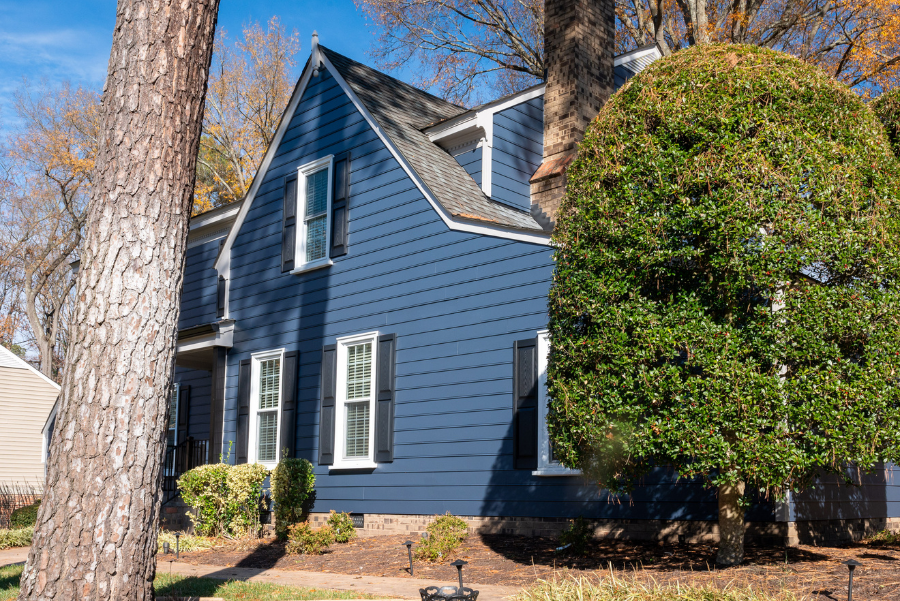
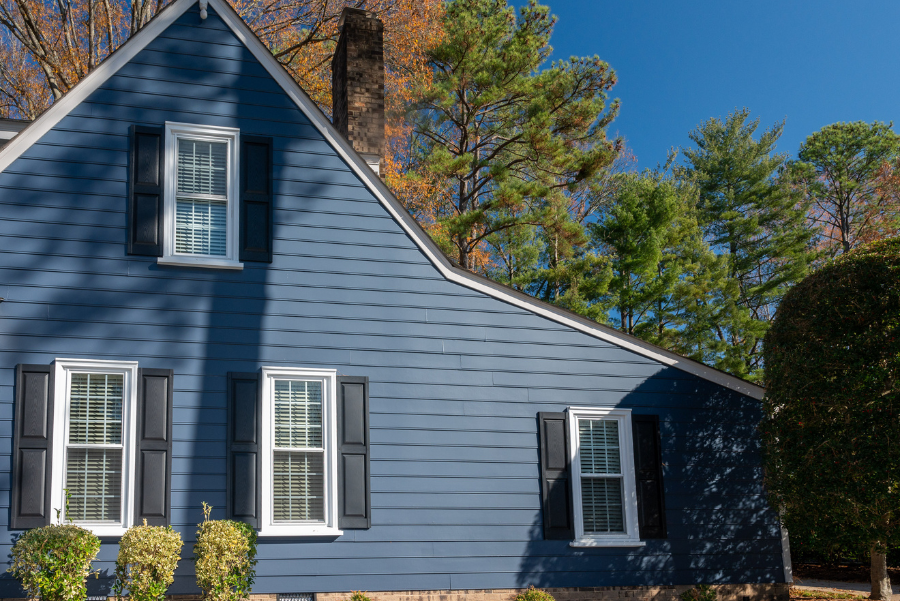
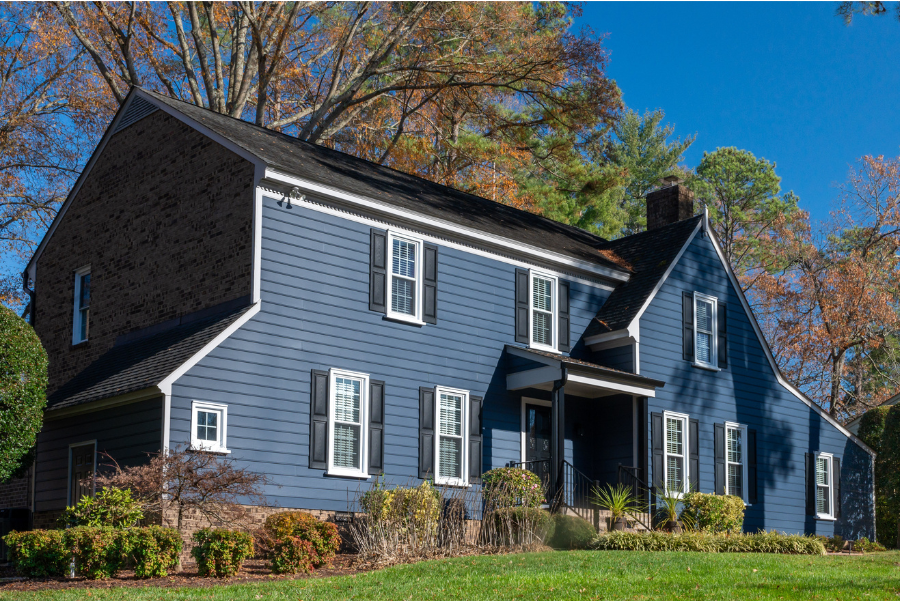
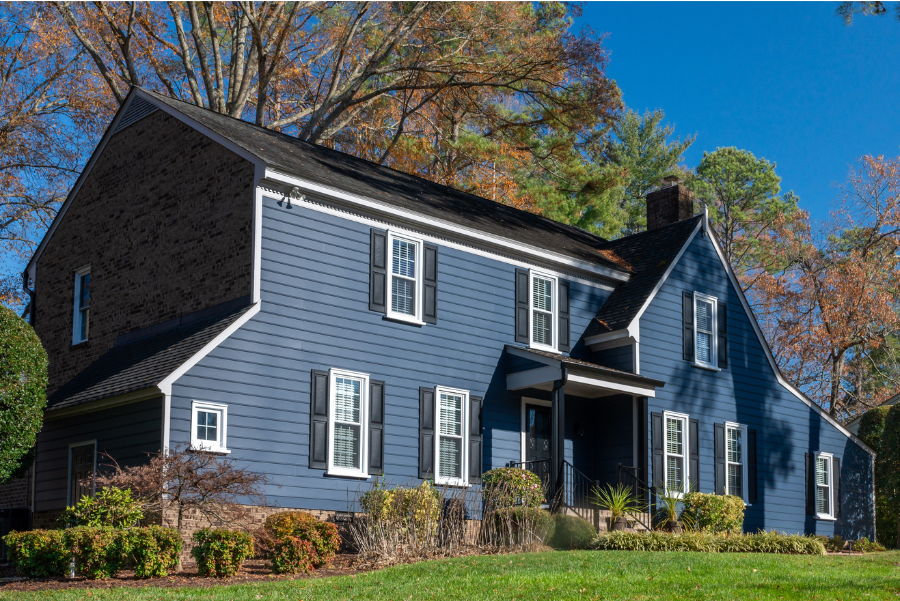
One fun aspect of the exterior paint job, Robin says, was changing the look of the home, which her family has lived in for 25 years. Previously, the house was gray wood clapboard with black shutters, white trim, and yellow doors. Now, the house is blue with black shutters and doors, and pearl gray trim, which was suggested by a member of the Holtz team.

Robin had seen the blue on an acquaintance’s house, which has fiber-cement lap siding. Wanting the same hue – Deep Ocean – but not the siding itself, Robin requested a sample from the manufacturer, and the Holtz team had Sherwin-Williams Emerald Rain Refresh paint tinted to match their wood siding.

“The color is spot-on,” she says.

Robin says it was a pleasure to work with Holtz painters again. “Their people are very nice; they must be treated well,” she says. “They’re so considerate, clean, and very punctual.” During the exterior project, Robin was startled when the team replaced patio furniture and planters every day, as they were finishing work. “I told them that wasn’t necessary,” she says. “But they said they wanted to make it right for the evening, in case we wanted to use the patio.”

There was a gap in time from when Robin and her husband signed the contract in early 2023 and when the painting happened in the fall. “We knew we would have to wait,” Robin says. “We’re very in tune with keeping up with our property, because it’s an investment. We’re not going to let things languish. And they did a really good job.”
Protecting Your Home’s Exterior in Winter Months

Protecting Your Home’s Exterior in Winter Months

While cold weather often means homeowners turn their attention to indoor projects, it’s possible – and may even be essential – to paint some or all of a house’s exterior during the winter months.

“Paint is the protective coating over top of the wood substrates,” says Thomas Freeman, sales representative for The Sherwin-Williams Company. “Wood, when exposed to the elements – whether moisture or sun – over time, is going to rot. The paint is what protects it from rotting.”

While prolonged exposure to moisture can lead to problems at any time of the year, the issues become more pronounced in cold weather, as ice crystals form and expand, enlarging cracks. Because damage occurs under the surface, it can be easy to miss.

“You can have structural issues, not just damage to windows and siding,” Freeman says, adding that masonry may also suffer and should be part of any exterior assessment.

For many homeowners, their house is their largest investment. The exterior should be surveyed regularly, but especially as colder and wetter weather looms, to ensure that cracks are sealed and small issues are repaired, either through caulking or painting. H.J. Holtz & Son offers this exterior review at customers’ request. Necessary repairs, including replacing rotted or damaged wood, can be handled by the in-house carpentry team.

If painting is required, the good news is that certain premium exterior paints can be applied at temperatures as low as 35 degrees Fahrenheit. Sherwin-Williams offers four options: SuperPaint, Latitude, Duration, Emerald, and Emerald Rain Refresh. “Each has different characteristics with durability, how they work, and how they perform in different weather conditions,” Freeman says. “Some are even self-cleaning.”

These premium exterior paints can be used at lower temperatures and resist moisture in just two hours – 50% faster than typical exterior paint. Still, Freeman says, it’s important to pay attention when painting in the winter.

“In summer, painters can start as early as 6 or 7 a.m. and work until 5 or 7 p.m., as long as they’ve got sunlight,” he says. “But just because the sun’s up in winter, it doesn’t mean conditions are conducive to painting. You need to start later – to make sure it’s warm enough – and you need to finish earlier, to give the paint time to dry before the sun sets and evening dew creeps in.”

It may take more days to paint a house’s exterior in the winter, but the actual number of hours needed may not be as high as it seems, as work hours are stretched over more days, to ensure painting is happening with optimum conditions. Prep work can take a bit longer, as it’s not wise to leave wood exposed, waiting for paint. A crew is more likely to prep in sections, rather than all at once.

The key, Freeman says, is to hire painters who know how to work in winter. “Some guys aren’t responsible about waiting for the right conditions,” he says. “[Company president Rick] Holtz isn’t like this, fortunately. He’s going to get it right whether he makes money or not. Not all these guys are.”